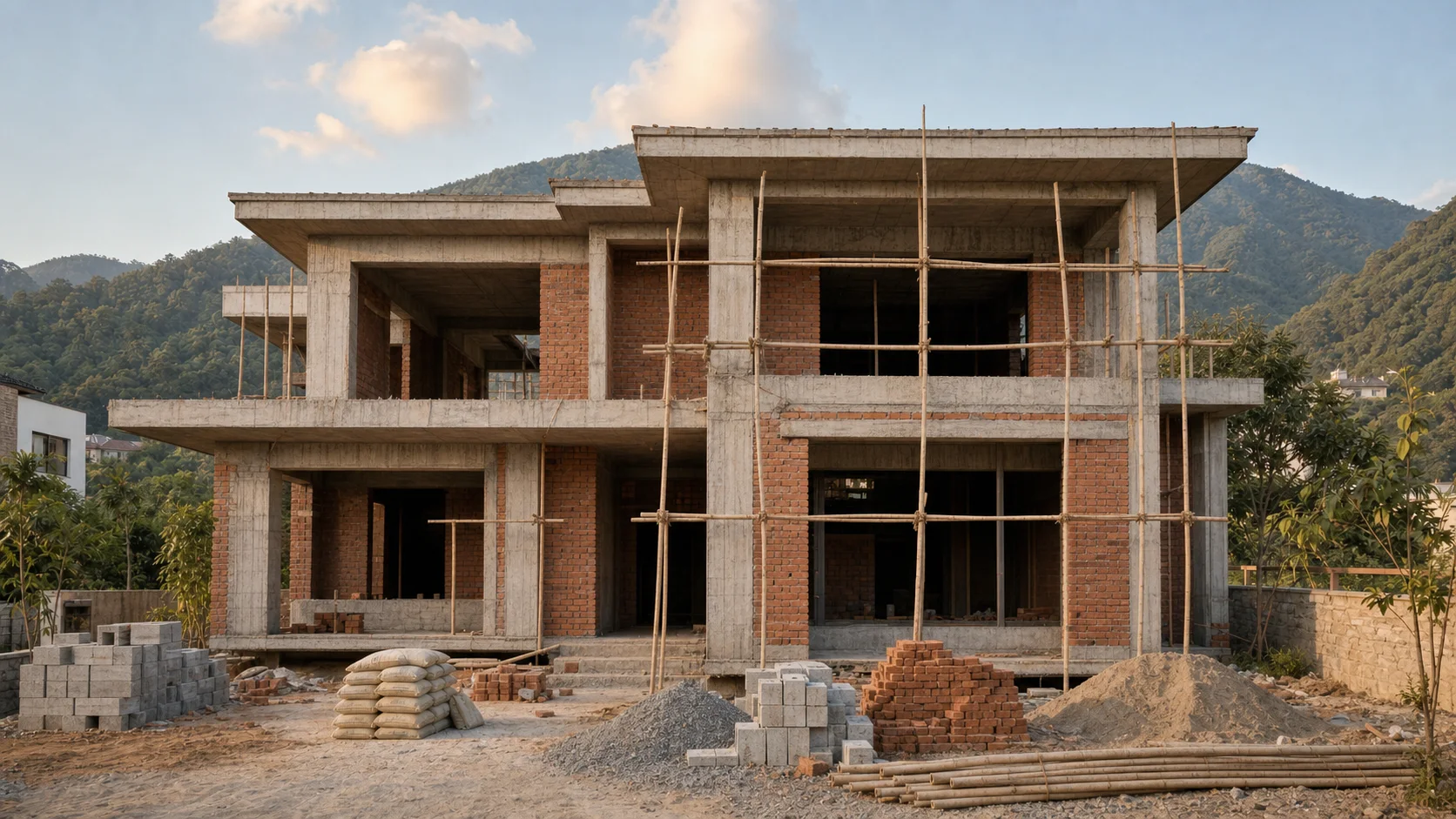
Monsoon construction is not automatically poor construction. The risk appears when rain is treated as a surprise instead of a condition that affects access, soil, storage, concrete placement, curing, waterproofing and the daily work plan.
Maintain a short look-ahead plan with weather-sensitive activities, protected alternatives and explicit stop conditions. A forecast helps scheduling; the actual site condition and competent technical judgement decide whether work proceeds.
Make temporary drainage the first activity
Before materials accumulate, decide how water will enter, cross and leave the site without eroding soil, flooding excavation, undermining access or discharging uncontrolled silt onto neighbouring property or public drains. Keep temporary channels, collection points and pumps accessible for inspection.
- Roof and upper-floor runoff has a temporary discharge route.
- Excavations and material stacks do not block the intended drainage path.
- Loose soil and debris are kept away from drains and neighbouring plots.
- Electrical connections, pumps and temporary lighting are protected and checked by competent personnel.
- The team inspects the site after heavy rain before restarting work.
Treat excavation and slopes as high-attention work
Rain can alter soil condition quickly. Water-filled excavation, softened edges, nearby surcharge, traffic vibration and unstable temporary slopes require competent assessment. Workers should not enter an excavation simply because it appeared stable the previous day.
Cracking near an edge, sloughing soil, unexpected seepage, movement in support, undermined access or water that cannot be controlled are reasons to stop affected work and obtain site-specific direction from the responsible professionals.
Store materials for the weather you have
| Material or work | Monsoon control | Evidence to retain |
|---|---|---|
| Cement and bagged products | Raised, dry, covered storage with stock rotation and no direct contact with damp surfaces | Delivery, batch information and storage-condition photographs |
| Steel | Organised support above mud, identification preserved and contamination controlled | Grade/diameter records and condition before fixing |
| Sand and aggregate | Separated, drained stockpiles protected from soil contamination and uncontrolled runoff | Source, receipt and condition |
| Blocks and bricks | Stable stacking, clean access and moisture condition managed for the specified work method | Product receipt and pre-use condition |
| Finishes and joinery | Weather-tight storage only after the building and substrate are ready | Delivery inspection and moisture/readiness checks where specified |
Have a rain decision for every concrete pour
A concrete plan should cover access, delivery continuity, placement sequence, protection, sampling, equipment backup and what happens if weather interrupts work. Do not allow uncontrolled water addition to “improve” workability. Do not improvise a construction joint after an interruption without technical direction.
The responsible team should record delivery details, placement timing, weather, required tests, any delay and the curing/protection method. Fresh surfaces need appropriate protection from damaging rainfall and runoff, while curing must still follow the project specification.
Masonry and plaster need substrate control
Covered work can still fail when walls, backgrounds or materials are too wet, contaminated or unevenly exposed. Schedule masonry and plaster around actual substrate condition. Protect fresh work from direct rain, washout and rapid cycles of wetting and drying. Allow sufficient drying and investigate moisture sources before closing walls or applying finishes.
Photographs can record progress, but they do not replace checks for line, level, bonding, service chasing, surface preparation and the specified curing or protection process.
Use the monsoon to test water-management details
Rain reveals where water wants to go. Capture observations around terraces, balconies, sunken areas, parapets, shafts, openings, plinths and site grading. Convert each observation into a tracked issue with an owner and close-out evidence.
Waterproofing still requires the specified substrate preparation, detailing, application conditions, protection and testing. Applying a product to an unsuitable wet or dirty surface because rain is expected is not a substitute for a complete system.
A practical daily monsoon record
- weather and site condition at start and after significant rain;
- water accumulation, drainage action and pump operation;
- excavation, temporary works and access observations;
- materials delivered, covered, rejected or relocated;
- activities started, paused or resequenced and why;
- technical instructions, photographs and close-out responsibility;
- impact on the next three to seven days of work.
A useful monsoon plan does not promise uninterrupted work. It makes the project’s decisions visible: what can proceed, what needs protection, what must wait and who approves the restart.
Plan the work before the weather changes.
Talk to CivVision about a stage plan, BOQ and evidence-led construction workflow for your Dehradun home.
This article is general educational guidance. Weather, soil, excavation, temporary works, electrical safety, concrete and waterproofing decisions require site-specific assessment by the relevant qualified and competent professionals.